Ask about the body. Watch it answer.
A 3D anatomy atlas for teaching and study. Ask a question and the model moves — isolating the structure, ghosting the layers in front of it, naming what it shows. 3,478 structures in Terminologia Anatomica, on your own computer.
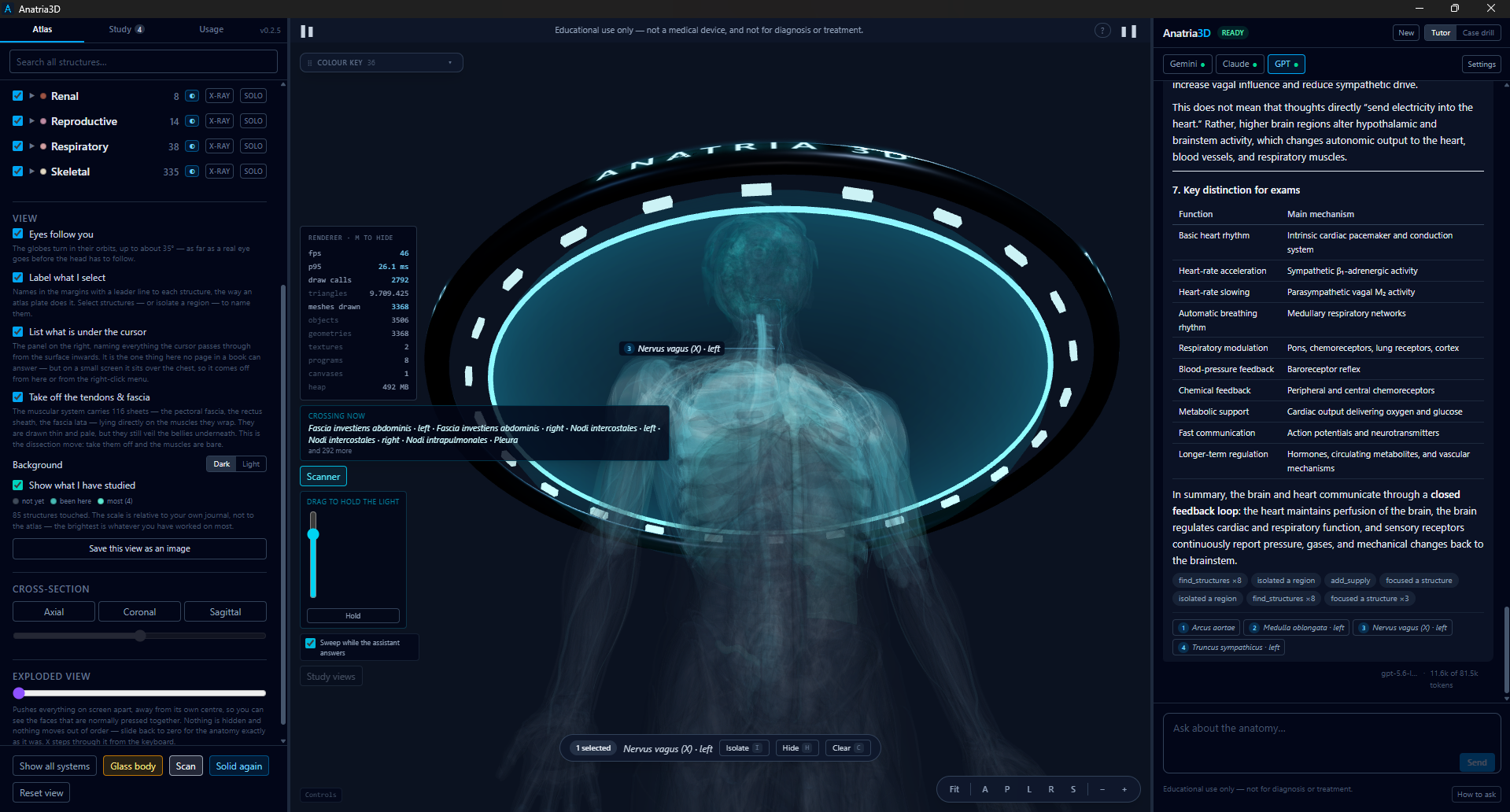
A plane of light that reads the body
A ring descends onto the head and travels to the feet. Every structure the plane reaches lights up whole while it passes, and a panel names what is being crossed — in the order the structures actually lie in the body. On a darkened body it can give each one its own colour back instead.
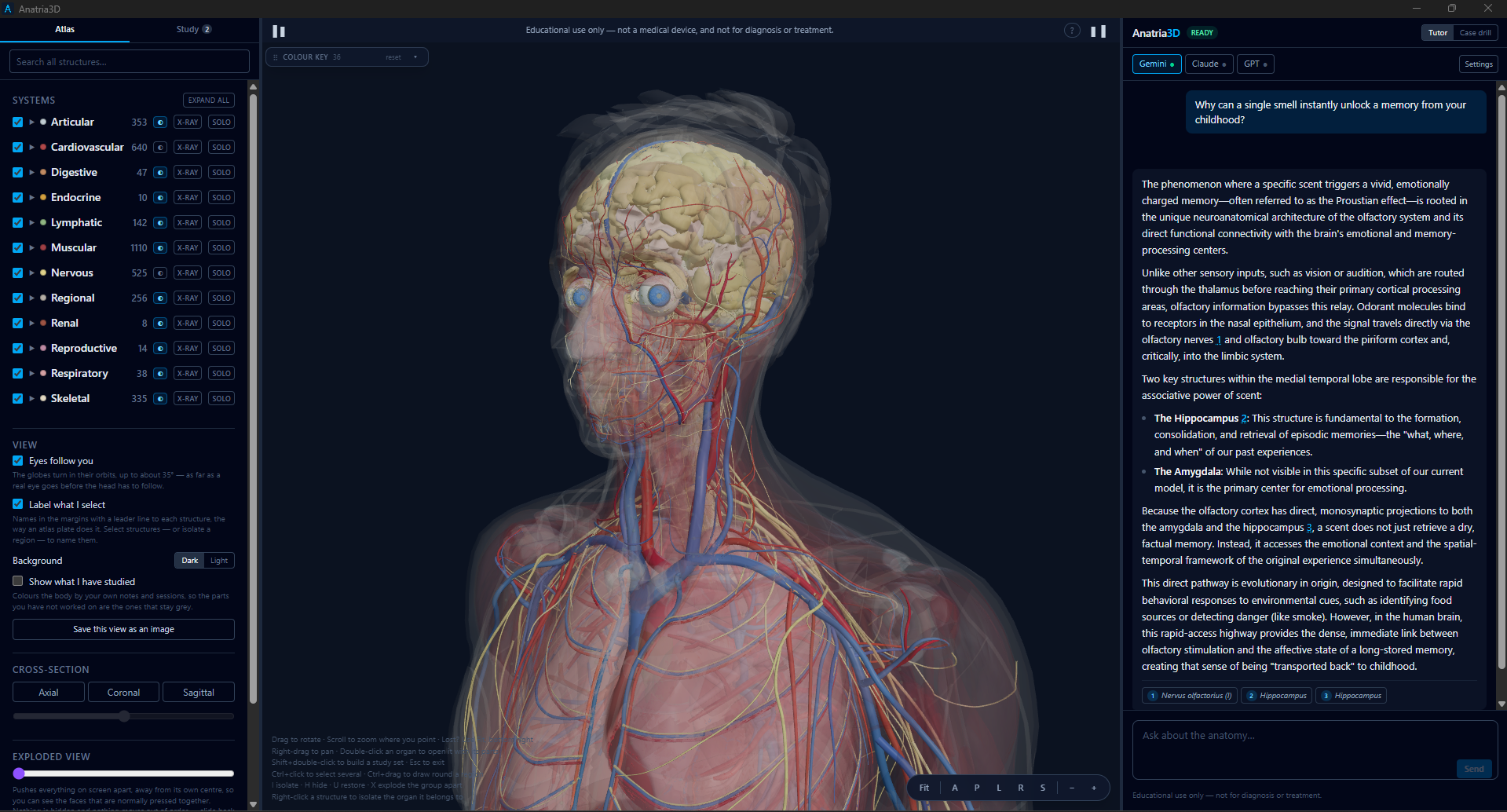
An assistant that shows instead of describing
Ask why a smell recalls a memory and the answer arrives with the olfactory pathway on screen. Every structure it names carries a numbered pin: hover to highlight it, click to fly there. You choose the provider and use your own key.
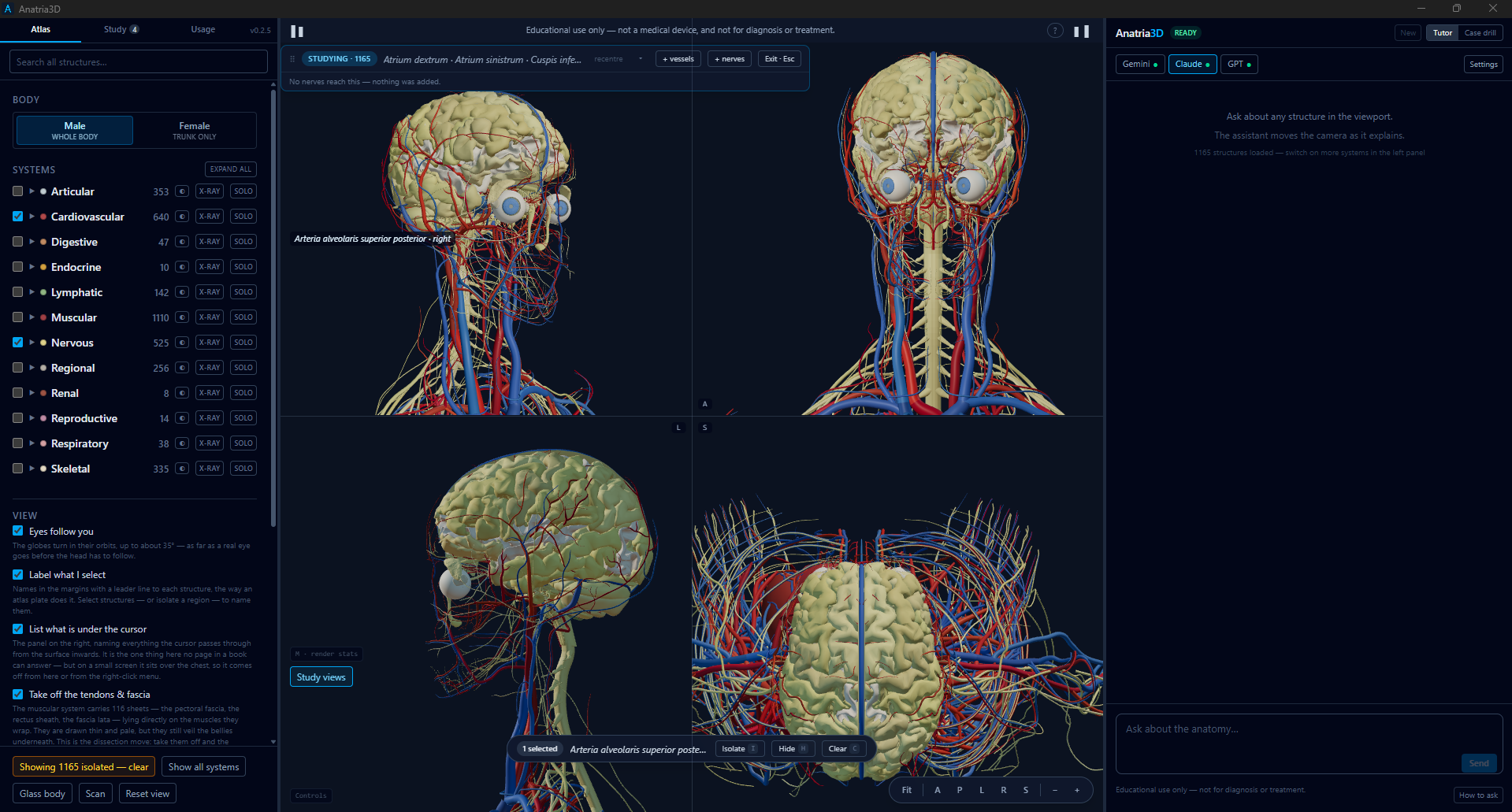
One structure, from four sides at once
An atlas plate shows a single view and leaves the rest to your imagination. Isolate something and the viewport splits: the panel you drive behaves exactly as it did, and three fixed anatomical views follow it, so all four agree about how big the thing is and where you are looking from.
Universities and teaching
Prepare a lesson, project it in class, or hand it to students to revise with. The colour key and the labelled views print as atlas plates.
Clinics
Show a patient what you are talking about. The application holds no patient data and asks for none. Trying it is free; using it in a practice needs a licence — talk to us.
Physiotherapists
Muscles with their attachments, in three dimensions, and a fascia layer you can take off. Explain a movement by showing it.
It runs on your computer
Anatria3D is a desktop application. The atlas, your notes and your study history stay on your machine. Nothing is uploaded, there is no account, and there is no telemetry. When you use the assistant, you bring your own API key — it is stored in your operating system's credential manager, and nothing in the application can read it back. The source code is public, so this is something you can check rather than something you have to believe.
Free for study, teaching and academic research. Clinics and other commercial use need a licence. Windows and Linux, 64-bit. Installs without administrator rights.
Talk to us
Using it at a university, a clinic or a practice, or thinking about it? Write and tell us what you need — including what is missing.
We could not confirm that your message was sent. Please check your connection and try again.
Thank you — we will reply to the address you gave.